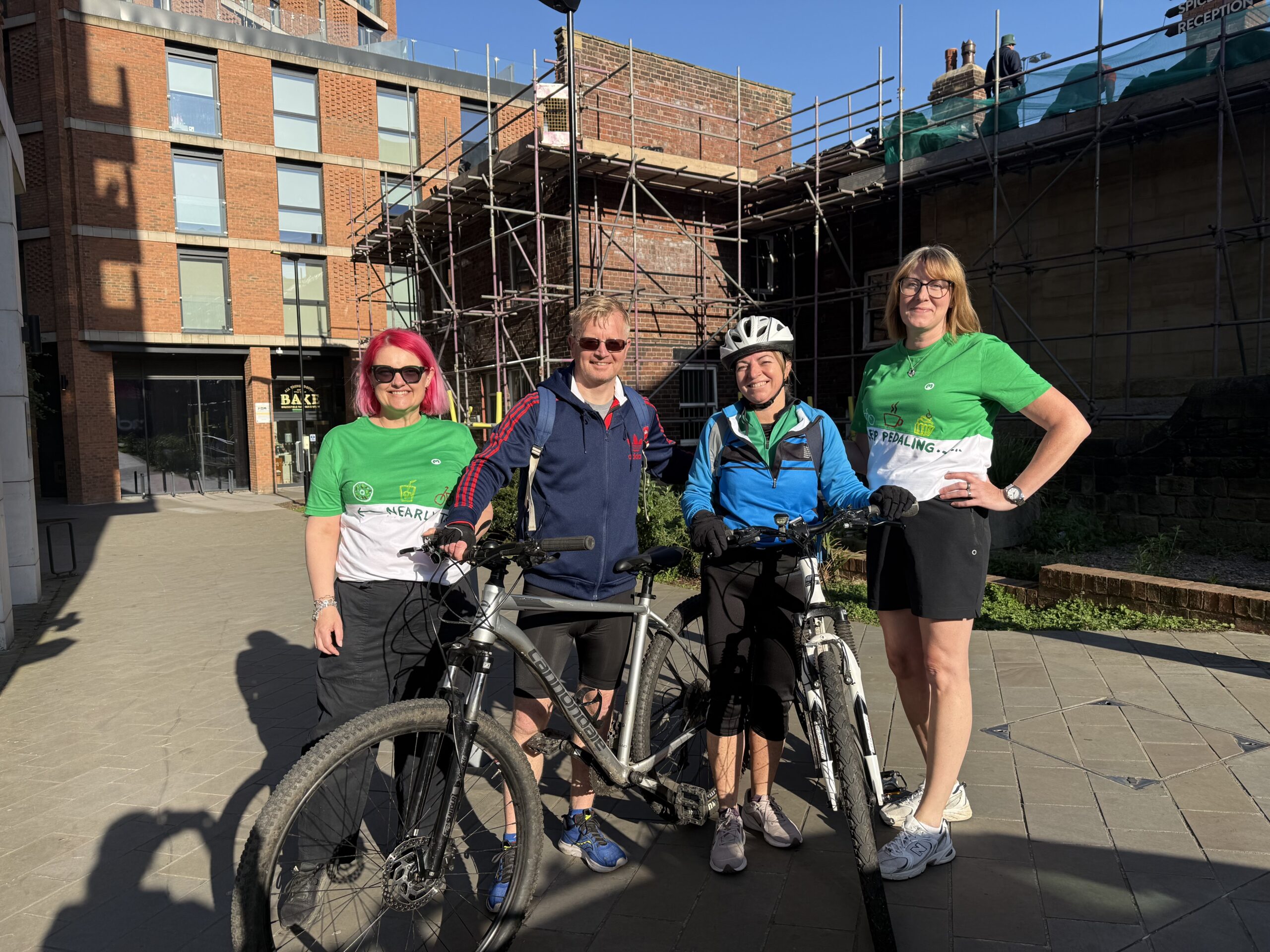
It started, as many ill-fated adventures do, with my husband Chris having an idea. "We should cycle from Leeds to Liverpool along the canal," he said, with the casual confidence of someone who had clearly not thought this through. We didn’t even own bikes. My entire cycling experience amounted to the odd spin class at the gym — and that was years ago, on a stationary bike that went precisely nowhere. The canal, as it turns out, goes quite a long way. I should have said “no, this is crazy”. Instead, I said “yes”. And that yes — and everything that followed — turned into one of the most challenging, exhausting, and genuinely meaningful experiences of my life.
Why we really did it
Underneath the daft idea was a very real reason. My sister had just been diagnosed with cervical cancer and needed to undergo an intense chemotherapy and radiotherapy programme. Cancer was already an unwelcome intrusion in our lives witnessing my dear friend, Jenny, deal with the daily battles of stage 4 bowel cancer. Two really important people in my life — both navigating something I couldn't fix, couldn't carry for them, and couldn't make better with any amount of wanting to. That helplessness is its own kind of weight. So, when Chris suggested the ride, something in me recognised it for what it was: something we could actually do. Not a cure. Not a magic answer. But a tangible, physical act of love — legs on pedals, miles ticking by, raising money for the people and services that make the unbearable a little more bearable. We chose to ride for Macmillan Cancer Support. And we got on with finding some free bikes thanks to some really kind friends.
"Sometimes the most powerful thing you can do is simply show up — uncomfortable, underprepared, and going anyway."
Nearly 1,000 miles — before the ride even started
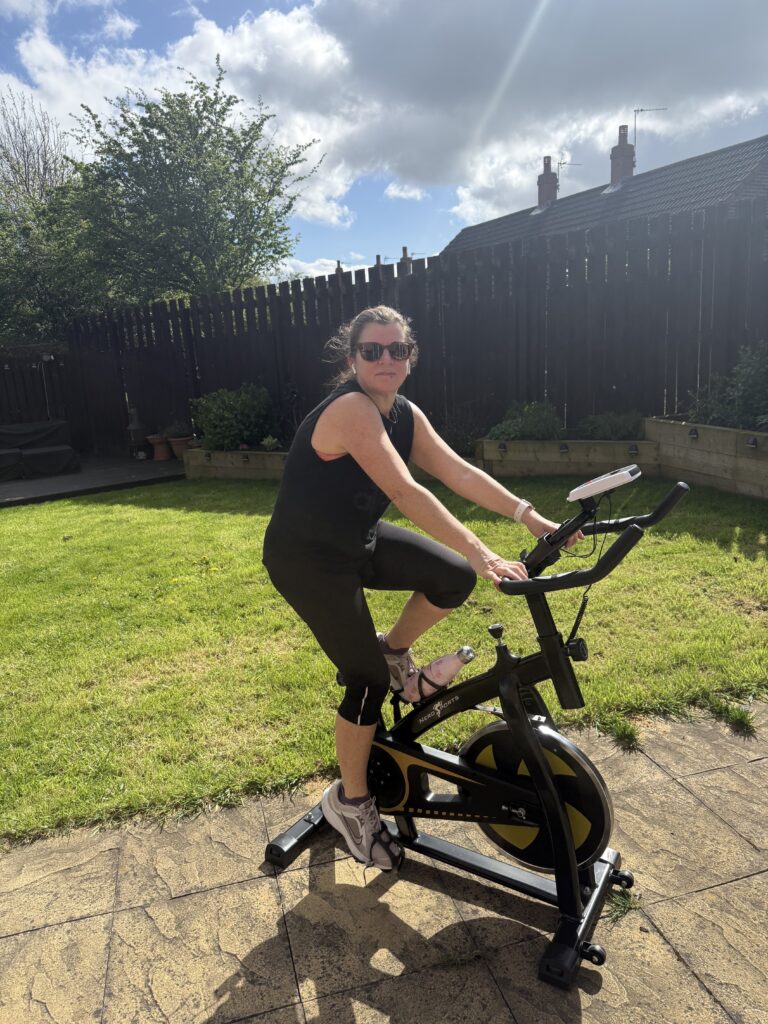
What followed was months of training that I did not take lightly. Nearly 1,000 miles on a static bike — sessions before work, sessions after work, sessions when every sensible part of me would rather have been on the sofa. Spin class was my starting point, but I quickly discovered that a stationary bike in a warm gym, in front of the TV in our lounge or in a sunny garden was a very different proposition to an actual canal towpath in the actual outdoors. So, I started getting out on the real bike too — the odd trip outside, gradually building up the miles, learning that wind resistance is real, that towpaths have texture, and that cycling outside requires a relationship with the elements that no gym can fully replicate. I wasn’t prepared for navigating narrow canal paths and bridges or equipped to deal with the recurring punctures that I seemed to acquire along the way.
The training itself became part of the commitment. Every early morning on that gym bike, every aching session — all of it was practice for the discomfort of the ride ahead. And strangely, that discipline started to feel like its own form of showing up for the people I was riding for.
The small matter of actually being able to cycle that far
I've thought a lot lately about comfort zones. We talk about them as though stepping outside one is a lifestyle choice — a bucket list tick, a weekend adventure. But watching my sister and my friend face what they're facing has fundamentally changed how I understand the word brave. They didn't choose to be pushed beyond their limits. Every appointment, every side effect, every uncertain scan result — that's not a comfort zone they can simply step back from. And somewhere in that realisation, choosing to be uncomfortable started to feel like the very least I could offer in return. Every time I wanted to stop on the ride — and there were moments — I thought about what real resilience looks like. The kind that doesn't get a choice. And I kept going.
Leeds to Liverpool: what the canal taught us
The Leeds-Liverpool canal is, objectively, beautiful. Locks, bridges, narrowboats, and moorland stretching out on either side. There were stretches where the only sound was the water and our wheels on the towpath, and of course me complaining. I understood exactly why Chris had suggested it. Our challenge had to be something significant, not easy but a real achievement.
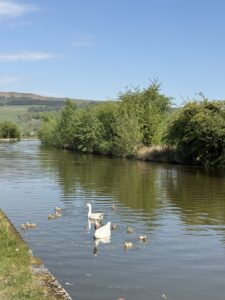
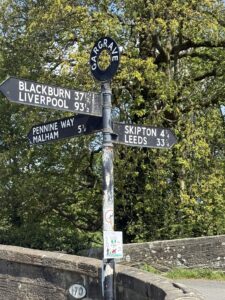
There is something quietly fitting about a canal route for a ride like this. A canal doesn't rush. It takes the long way round — through hills rather than over them, steady and persistent. That feels about right for what we were trying to do.
“The discomfort of the ride is nothing compared to the courage it takes to face what they face every single day."
What we raised
Together, we raised over £2,500 for Macmillan Cancer Support. That money goes towards nurses, financial guidance, emotional support, and helplines — the things that mean people don't have to face a cancer diagnosis alone. For families like mine, for friends like mine, those services are lifelines.
If you donated, even a small amount: thank you. You are genuinely part of this.
On resilience
Resilience isn't finishing without struggle. It isn't the absence of fear or pain. It's the decision, made over and over again, to keep moving forward anyway. I witnessed it on that towpath. I witness it every week in two people I love dearly. I crossed that finish line thinking of them. I always will.
If you're thinking about doing something like this — a ride, a run, a walk, anything — do it. Do it scared. Do it with no experience, no bikes, and a husband full of questionable ideas. Do it for someone who inspires you. You won't regret a single mile. Not even the 1,000 you did in the gym beforehand.
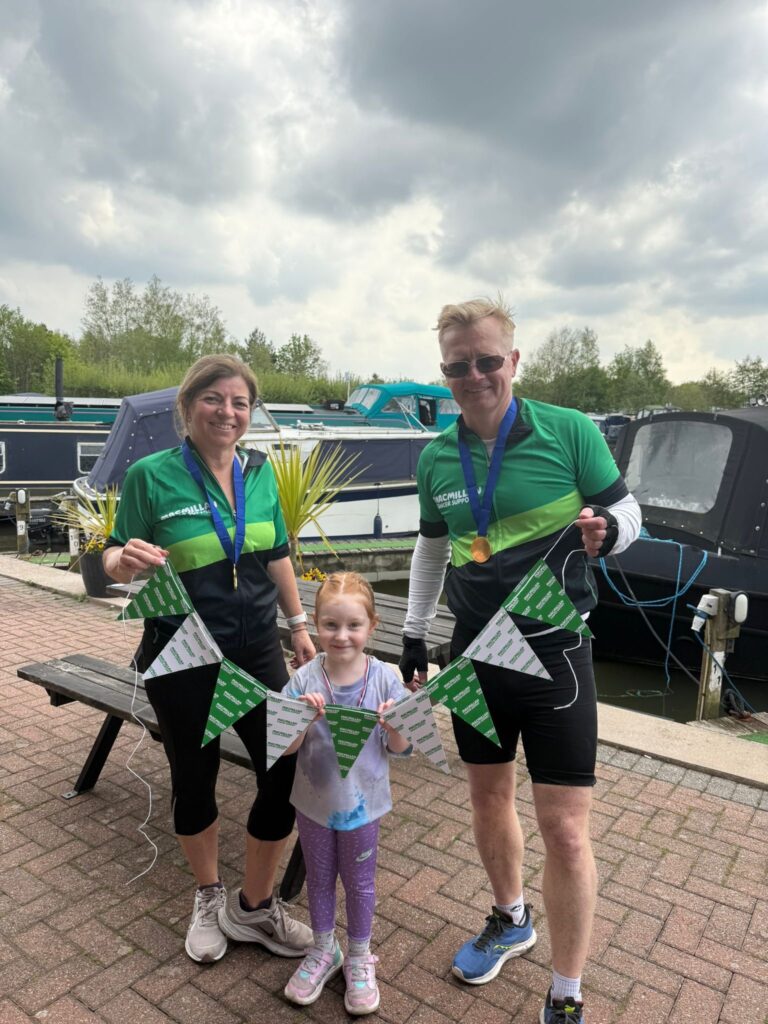
Charity: Macmillan Cancer Support — macmillan.org.uk
To support Macmillan or find out how they help people living with cancer, visit their website or call the free support line: 0808 808 00 00.